Podcast Equipment Price List in Kenya (2026): Rent vs. Buy Guide
Launching a high-quality video podcast in Nairobi requires a significant financial decision regarding hardware and production space.
Many creators struggle to choose between purchasing imported gear like the Shure SM7B or utilizing a professional podcast studio to lower their initial risks.
We have compiled this 2026 price guide to help you compare the true cost of ownership against the flexibility of renting.
Equipment Cost Summary (2026 Market Rates)
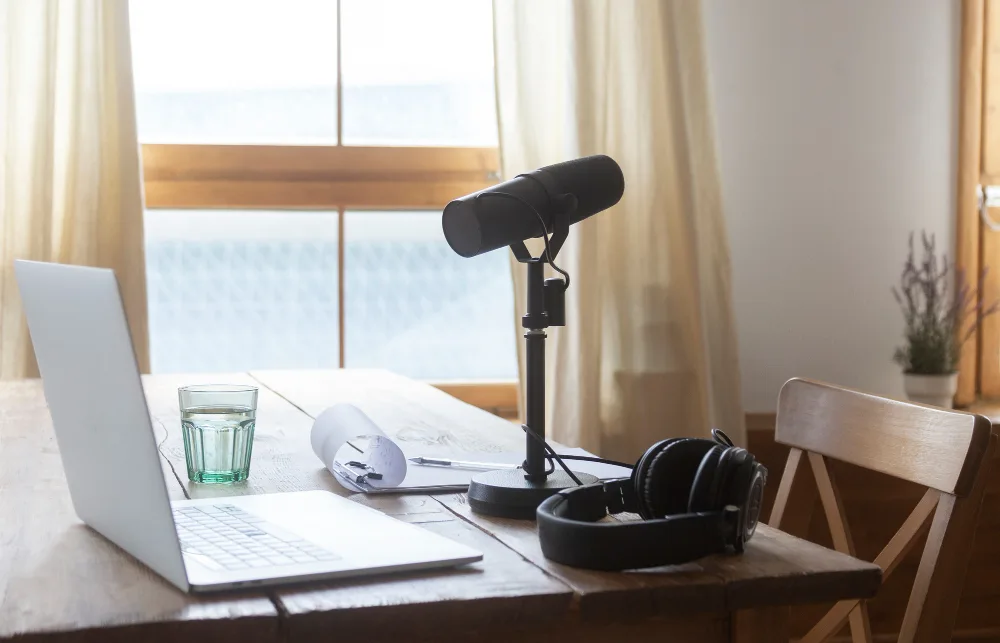
The cost of professional audio and video equipment in Kenya includes import taxes and shipping fees which often inflates the local retail price.
This table compares the estimated capital required to build a 2-person video podcast setup versus the cost of recording in a fully equipped studio.
| Equipment Item | Est. Purchase Price (Kenya) | Studio Rental Equivalent |
|---|---|---|
| Shure SM7B Mic (x2) | KES 140,000 | 28 Hours of Studio Time |
| RodeCaster Pro II Mixer | KES 125,000 | 25 Hours of Studio Time |
| Sony ZV-E10 Camera (x2) | KES 220,000 | 44 Hours of Studio Time |
| Godox Lighting Kit | KES 45,000 | 9 Hours of Studio Time |
| Acoustic Treatment | KES 30,000 | 6 Hours of Studio Time |
| TOTAL SETUP COST | KES 560,000+ | 112+ Episodes (Hourly Rate) |
*Note: Purchase prices are estimates based on average Nairobi electronics retailers. Studio rental equivalents are calculated based on a standard hourly rate of KES 5,000 for a multi-camera vodcast session.
The Entry-Level Home Setup Costs in Kenya
You can launch a podcast with a modest budget if you accept certain compromises on quality. The entry-level setup typically relies on USB technology. This bypasses the need for expensive audio mixers.
A popular choice in Nairobi is the Samson Q2U microphone. It plugs directly into your laptop and delivers respectable audio clarity for a solo host.
Lighting is usually the weak point in budget setups. Most beginners use a standard Ring Light. While affordable, these lights often create a flat look and reflect visible circles in your eyes or glasses.
You will likely rely on your smartphone for video. This works for short clips but limits your ability to record long episodes due to storage limits and overheating issues common in phones.
The Professional Broadcast Standard
Achieving the look and sound of top-tier shows requires industrial-grade equipment. This is where the costs rise significantly.
The industry standard microphone is the Shure SM7B. It is famous for its rich tone and ability to reject background noise. However, it is a "gain-hungry" microphone.
You cannot just plug it into a cheap mixer. You often need an additional device called a Cloudlifter to boost the signal cleanly, which adds another KES 25,000 to your bill.
Video quality at this level shifts from phones to Mirrorless Cameras. A two-person interview requires two separate camera bodies. We use Sony Alpha cameras paired with wide-aperture Sigma lenses.
This combination creates the blurred background effect (bokeh) that makes the image look cinematic. Managing this data requires high-speed V60 or V90 SD cards which cost over KES 10,000 each.
Hidden Costs of Owning Livestreaming Studio in Nairobi
Many creators budget for the camera and microphone but forget the accessories required to make them work. These hidden costs add up quickly.
Cables and Stands
High-quality XLR cables are necessary to prevent static buzz in your audio. You also need sturdy boom arms to hold the heavy Shure microphones. Cheap stands often sag under the weight.
Acoustic Treatment
Buying a great microphone does not fix a bad room. If you record in a standard Kenyan apartment with tiled floors and concrete walls, your audio will echo. You need to invest in thick rugs, heavy curtains, or acoustic foam panels to dampen the sound reflections.
Storage and Backups
Video podcasts generate massive files. A one-hour 4K recording from two cameras can exceed 100GB of data. You will need to purchase multiple external hard drives to store your footage safely. Cloud storage subscriptions for this amount of data become a recurring monthly expense.
The Strategic Advantage of Hiring a Studio in Kenya
The decision to rent goes beyond a simple cost comparison. It solves the logistical bottleneck that kills most new podcasts within their first year. When you record at home, you are forced to wear multiple hats simultaneously.
You act as the lighting technician, the audio engineer, the data manager, and the host. This split focus often degrades the quality of the interview because you are worrying about battery levels rather than listening to your guest.
Professional studios provide a "Plug and Play" workflow that eliminates technical anxiety.
You walk into a room where the lighting grid is already set to the correct color temperature and the microphones are sound-checked. A dedicated producer monitors the audio levels in real-time. If a guest laughs too loudly or leans away from the mic, the producer adjusts the gain immediately.
This human support ensures your final recording is usable, saving you from the disaster of discovering corrupted or distorted audio files after the guest has left.
Infrastructure reliability is another critical factor in Nairobi. Power stability can be unpredictable.
A professional facility operates with commercial-grade backup generators and Uninterruptible Power Supplies (UPS) for all recording gear. If the power cuts during a home recording, you risk corrupting the video file and losing the entire session.
In a studio environment, the recording continues uninterrupted, protecting your content and your professional reputation with high-profile guests.
When Ownership Makes Financial Sense
While renting offers flexibility for most interview-based shows, owning your equipment becomes the smarter financial choice under specific circumstances.
You should consider purchasing your own gear if your production model fits one of the following scenarios.
High-Frequency Content Creators
The math changes drastically if you record daily. If you plan to launch a "Morning Radio" style show or a daily market analysis vlog, studio rental fees will accumulate too quickly.
- The Calculation: Renting a studio for one hour daily (Monday to Friday) costs approximately KES 100,000 per month.
- The Verdict: At this volume, you would spend the equivalent of a full equipment purchase in less than four months. Ownership is the only viable path for daily output.
Geographic Location and Commute
Studios are heavily concentrated in commercial hubs like Westlands, Kilimani, and the CBD.
If you live in satellite towns such as Thika, Machakos, or Kitengela, the commute to Nairobi for every recording session adds hours of travel time and fuel costs to your production.
- Logistics: Driving from Thika to Westlands during peak hours can take two hours. This lost time reduces your productivity.
- The Verdict: Building a home studio eliminates the travel barrier. It allows you to record immediately when inspiration strikes without navigating Nairobi traffic.
Solo Formats and Streamers
Creators who stream live on Twitch or record simple solo commentaries do not require the complex infrastructure of a multi-camera studio. A solo setup is static and simple to manage.
- Simplicity: You do not need to manage guest microphones or switch camera angles.
- The Verdict: A simple USB microphone and a webcam are sufficient for this format. The cost of a studio is hard to justify when you do not need soundproofing for multiple speakers or 4K multi-cam switching.
How to Book Your First Professional Livestreaming Session in Kenya
You do not need to be a technical expert to start recording. Our studio workflow is designed to handle the engineering while you focus on the conversation.
We recommend a simple preparation process to ensure you get the most value out of your booked time.
Preparing for the Studio
Studio time is billed by the hour, so efficiency is key. Arriving prepared ensures you spend your paid time recording content rather than setting up.
- Guest Management: Confirm your guest's attendance 24 hours in advance. Ask them to arrive 15 minutes early for a sound check. Late arrivals eat into your recording time.
- Storage Media: We provide the cameras and audio recorders. However, you should bring a high-speed portable hard drive (SSD) or a large flash drive (64GB minimum) to transfer the raw 4K video files immediately after the session.
- Outline Your Topics: Have a printed run sheet or bullet points on your tablet. This keeps the conversation focused and reduces the need for heavy editing later to remove awkward pauses or dead air.
Our Studio Package
When you book a session at The Photoshoot Studio Kenya, you receive a complete production solution. We do not charge extra for the "good" equipment.
- Video: Multi-camera 4K recording using Sony cameras.
- Audio: Shure SM7B microphones and RodeCaster Pro mixing.
- Lighting: Professional 3-point lighting grid tailored to your skin tone.
- Staff: A dedicated producer to monitor audio levels and switch camera angles.
Stop waiting for the perfect budget to buy your own gear. You can launch your brand this week with professional standards.
Check the availability of our Westlands podcast studio and book your recording slot today.